


March 20th | Wandering Can Prepare You
- CoachJasonMays
- 2 minutes ago
- 3 min read
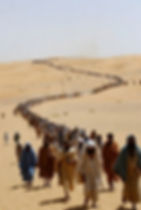
As Moses recounts Israel's journey near the end of their nearly 40 years in the wilderness, Deuteronomy 2 highlights a pivotal marker:
"Thirty-eight years passed from the time we left Kadesh Barnea until we crossed the Zered Valley." (Deuteronomy 2:14)
Those 38 years—from the rebellion at Kadesh Barnea (when the people refused to enter the Promised Land in faith) to crossing the Zered—were largely a time of waiting. The Israelites moved through the lands of the Edomites (descendants of Esau), Moabites, and Ammonites (decendants of Abraham's nephew, Lot) without fighting or seizing territory. God explicitly instructed them not to harass these relatives or take their land, for He had already assigned those territories to Esau's and Lot's descendants.
Yet later, when the time was right, God directed Israel to confront and defeat Sihon king of Heshbon (the Amorites), allowing them to seize that land and its plunder. This contrast shows clearly:
God alone determines borders, nations, and destinies—not human ambition or strength.
What stands out is God's profound foresight in these seemingly minor instructions. By sparing the Edomites, God preserved their lineage. Centuries later, Herod the Great (an Idumean/Edomite descendant) rose to power. Though he infamously ordered the slaughter of infants in Bethlehem to eliminate the newborn King Jesus, God's plan unfolded untouched—Herod's actions fulfilled prophecy and highlighted the arrival of the true Messiah. The Edomites' survival also enabled Herod to rebuild the temple in Jerusalem, setting the stage for Jesus' ministry there.
By not conquering Moab, God safeguarded the Moabite people. From this nation came Ruth the Moabitess, who chose faith in Israel's God, married Boaz, and became the great-grandmother of King David—and thus an ancestor in the lineage of Jesus Christ Himself (Ruth 4; Matthew 1:5).
God orchestrated history in ways no one could foresee. His "no" to certain battles protected key threads in the tapestry of redemption.
Those 38 years? They weren't filled with dramatic conquests or visible progress. The people mostly survived—circling, waiting, enduring. During this time, God allowed the entire generation of warriors—the men of unbelief who rebelled at Kadesh—to perish from the camp, exactly as He had sworn (Deuteronomy 2:14-15). The old generation of doubt and self-reliance had to die out before the new generation, shaped by dependence on God, could step into the promise.
We, too, face seasons of "wilderness wandering" in life—times when progress feels stalled, prayers seem unanswered, and we're simply called to survive and trust. These periods aren't wasted; they are preparation. God uses them to root out unbelief, self-reliance, and impatience in us. His timing rarely matches ours, but His sovereignty is perfect.
Just as He provided manna, water, and guidance through Israel's long detour—never letting them lack—He sustains us in our wanderings. He is sovereign over nations, history, and our personal stories. He sets boundaries, not out of limitation, but out of wisdom and love.
Wandering is not punishment without purpose; it is a season of preparation. Obedience, patience, and respect for the boundaries God sets (even when they frustrate us) pave the way for the harvest season ahead.
Trust that the God who shaped the path from Kadesh to Zered—and from Ruth to Jesus—knows the way forward for you.