


February 26th | What Esau Are You Fearing Today?
- CoachJasonMays
- 13 hours ago
- 2 min read

Jacob is gripped by fear. Despite God's recent promise in Genesis 31:3—"Go back to the land of your fathers and to your relatives, and I will be with you"—Jacob's immediate response mixes faith and self-reliance. He prays earnestly to God for the first time recorded since Bethel, pleading for deliverance: "Save me, I pray, from the hand of my brother Esau, for I am afraid he will come and attack me" (v. 11). He reminds God of His covenant promises to Abraham and Isaac, and of His assurance to prosper him.
Yet, even after this heartfelt prayer, Jacob presses ahead with his own clever schemes. He divides his camp into two groups for survival if one is attacked (v. 7-8). He prepares a series of lavish gifts from his herds—goats, sheep, camels, cattle, and donkeys—sent in waves ahead of him. Each group of servants is instructed to say to Esau: "Your servant Jacob is coming behind us" (v. 18), hoping these offerings will appease Esau and soften his heart.
Jacob is trying to "manage" the threat through strategy and generosity, assuming the worst about Esau's intentions. In reality, God had already been at work in Esau's heart. When the brothers finally meet (in the verses beyond this passage), Esau runs to embrace Jacob, kisses him, and weeps—no hostility, only reconciliation. Jacob's fears proved unfounded; he had been borrowing trouble from tomorrow, inventing adversity that never materialized.
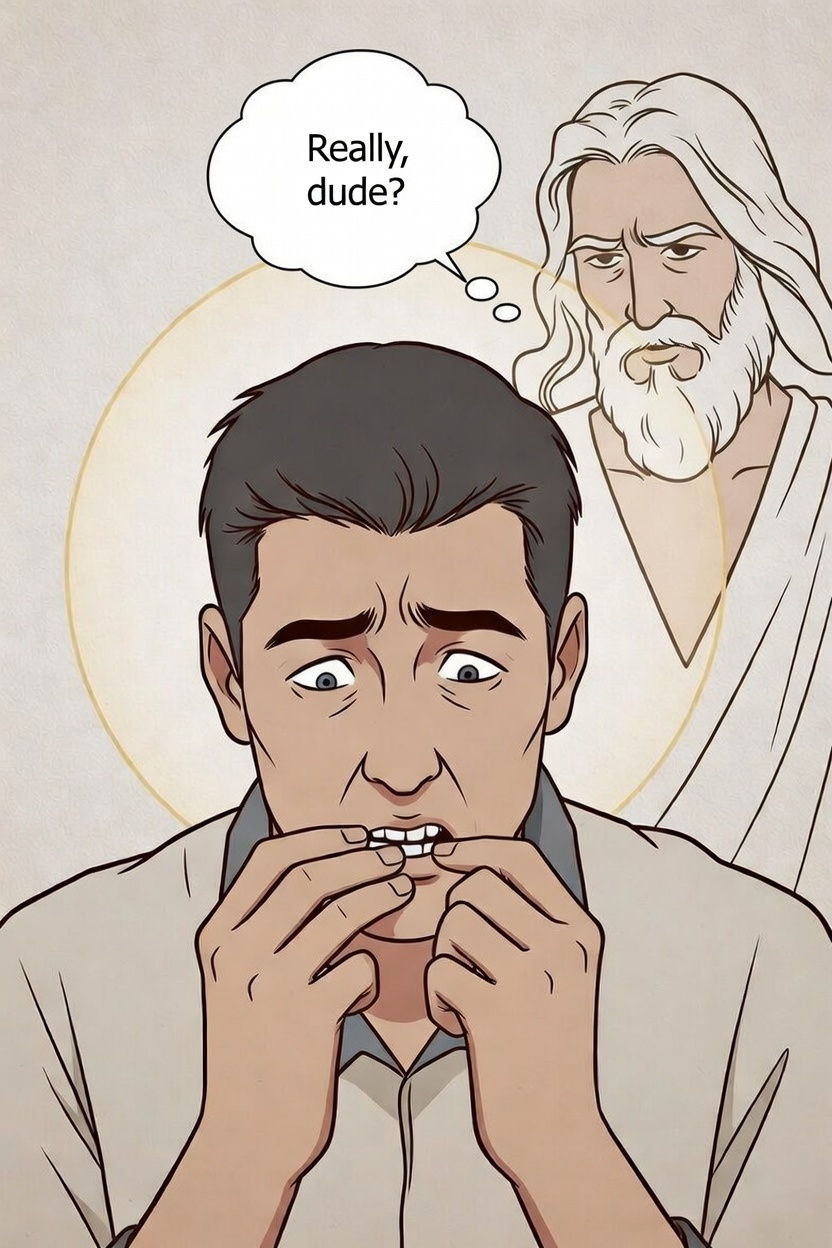
How often do we do the same? We cry out to God in our stress and anxiety, asking for His help, yet we quickly revert to our own plans, backups, and manipulations. Fear pushes us toward self-reliance instead of God-reliance. We exhaust our time, energy, and resources trying to control outcomes that God has already handled.
Psalm 56:3-4 offers the better path: "When I am afraid, I put my trust in you. In God, whose word I praise—in God I trust and am not afraid. What can mere mortals do to me?" The psalmist repeats this emphasis in verses 10-11, underscoring that true security comes from trusting God's word and character, not our schemes.
When fear rises—whether about relationships, finances, health, or the future—pause after praying. Resist the urge to immediately jump to "Plan B" or extreme measures to protect yourself. Remember Jacob's story: God's promises are reliable, and He often works in ways (and in others' hearts) that we cannot see. Trust Him fully, and let go of the need to orchestrate every detail. What "Esau" are you fearing today?

Comments